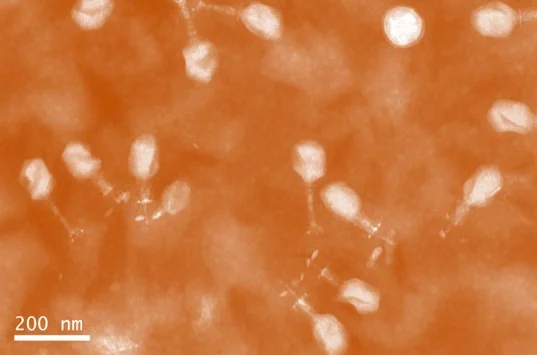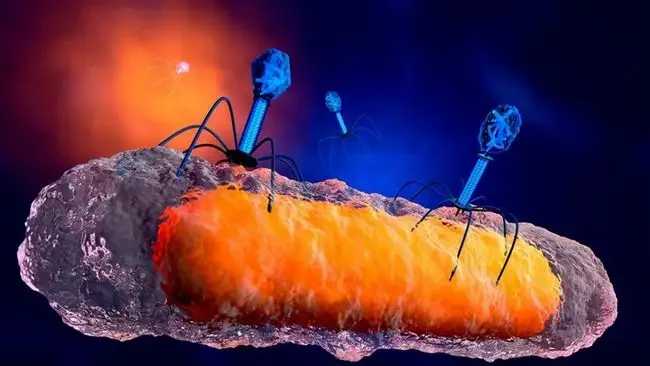
English translation updated . This article reflects the source material at its original publication date. Read the Chinese source.
1. Phages: revisiting a biological approach to bacterial control
Fresh produce can carry foodborne bacteria at every stage from harvesting and packing to preparation in the kitchen. Pathogens including Salmonella, pathogenic Escherichia coli, Shigella and Listeria monocytogenes can cause diarrhoea and, in severe cases, kidney failure or other life-threatening illness.
Antibacterial treatments and chemical disinfectants help control contamination, but resistance and environmental concerns motivate alternative approaches. Phages occur in soil, water, surfaces, foods and the intestinal tracts of humans and animals. Their bacterial host specificity has prompted research into reducing foodborne contamination. Safety must nevertheless be assessed for each preparation and intended use; naturally occurring phages are not automatically suitable for food applications.
The source discusses food-biological-control phages using the historical families Myoviridae and Siphoviridae. Desirable properties include a lytic lifecycle; absence of known virulence, lysogeny or allergen-associated genes or proteins; efficient production in appropriate nonpathogenic hosts; and stability under expected application conditions. Detailed characterization is essential.
Bhardwaj and colleagues describe three settings for phage-based food safety: control before harvesting; decontamination of nonliving surfaces in processing facilities; and direct application to harvested or processed food. The latter two are particularly relevant to fresh fruit and vegetables [2].
2. Foodborne illness associated with fresh produce
The archived article cites historical CDC-related estimates of approximately 250 foodborne diseases and 9.4 million annual U.S. cases, with about 56,000 hospitalizations and 1,300 deaths. It also repeats a broad “top five causes” ranking attributed to CDC 2010 without a complete reference. These figures and the ranking are retained as historical source claims, not current comprehensive burden estimates.
Recognized agents include Campylobacter, Salmonella, pathogenic E. coli, L. monocytogenes, Shigella, hepatitis A virus, Cyclospora and Cryptosporidium. Factors such as inadequate temperature control, poor staff hygiene, contaminated equipment and unsafe supply sources contribute to outbreaks. Fresh produce itself can carry contamination [3].
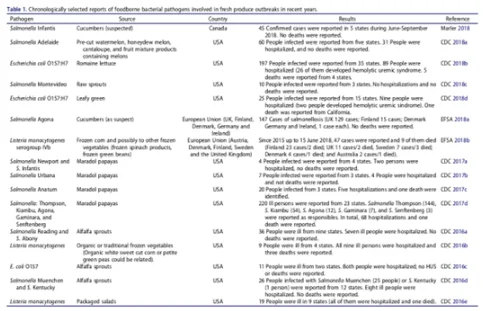
Table 1. Selected reports of foodborne bacterial outbreaks involving fresh produce, reproduced in the original article from López-Cuevas and colleagues, 2021.
3. Experimental applications on fruit and vegetables
Salmonella
The source describes SalmoFresh™, a commercial six-phage cocktail targeting Salmonella, and reports GRAS recognition in the United States and authorizations in Canada and Israel. These are statements about the product’s status in the source publication, not verification of current authorization in any jurisdiction.
Spricigo and colleagues investigated a three-phage cocktail comprising UAB_Phi20, UAB_Phi78 and UAB_Phi87. After 60 minutes at room temperature, it reduced S. Enteritidis and S. Typhimurium on fresh-cut lettuce [4].
Huang and colleagues studied LPSE1 against S. Enteritidis ATCC 13076 on lettuce stored at 24°C. At multiplicities of infection of 1, 10 and 100, the source reports reductions of 2.02, 1.71 and 1.45 log₁₀ CFU/mL, respectively. These results show that experimental performance depended on application conditions and was not simply proportional to the nominal phage-to-bacterium ratio.
Escherichia coli O157:H7
Abuladze and colleagues reported that EcoShield™ reduced E. coli O157:H7 on broccoli stored at 10°C by 99.5%, 99% and 97% after one, five and seven days. Sharma and colleagues reported reductions described in the source as 10² CFU/cm² on fresh-cut cabbage and 10²–10³ CFU/mL on cantaloupe.
Carter and colleagues experimentally contaminated romaine lettuce and stored it at 4°C for five days. The source reports that spraying EcoShield™ reduced viable E. coli by up to 87% within five minutes. Viazis and colleagues found that combining the BEC8 cocktail with trans-cinnamaldehyde produced greater antibacterial activity against a four-strain E. coli O157:H7 mixture on lettuce and spinach than either component alone [5]. These are study-specific findings, not guaranteed performance under other food-processing conditions.
Listeria monocytogenes
The original article dates initial U.S. regulatory acceptance of Listex™ P100 to 2006 and describes its use against L. monocytogenes in ready-to-eat foods. Regulatory dates and product-specific permissions should be checked with the relevant regulator before commercial use.
Oliveira and colleagues investigated the effects of food pH and physical form on P100 activity. Activity in melon slices or juice was greater than in pear, while very little active phage was detected in low-pH apple products. The source reports reductions of 8.00 log CFU/mL in melon juice and 2.10 log CFU/mL in pear juice. The findings suggest that food chemistry, particularly acidity, can strongly affect phage performance; additional approaches may be needed in low-pH products [6].
Outlook
Potential benefits of phages in fresh-produce safety have encouraged research, but important challenges remain: consistent effectiveness, selection of single-phage or mixed formulations, storage as liquids or powders, and efficient large-scale amplification and purification. Biotechnology and molecular biology may help address these constraints and expand the range of tools available for foodborne bacterial control.
The archived article contains references [2]–[6] and an image attribution to López-Cuevas et al. (2021), but no complete bibliography. Those missing source details remain an editorial review item.