English translation updated . This article reflects the source material at its original publication date. Read the Chinese source.
Originally published on 21 February 2023. Taxonomic names and descriptions of the state of research follow the historical source.
1. Phages: the predominant viruses in the gut
Bacteriophages are viruses that infect bacteria and are among the most abundant and genetically diverse biological entities on Earth. Almost every ecosystem containing bacteria also contains phage communities, including the complex intestinal ecosystem. As viral metagenomics has developed, the gut virome has attracted widespread attention, and the composition of intestinal phage communities has gradually come into view. Under the classification used in the source, human gut phages consist mainly of the double-stranded DNA phage families Myoviridae, Siphoviridae and Podoviridae, together with the single-stranded DNA family Microviridae. The virome database discussed in the article indicates that 97.7% of the human gut virome consists of phages, 2.1% of eukaryotic viruses and 0.1% of archaeal viruses. Of these phages, 88% had not been classified by the International Committee on Taxonomy of Viruses (Figure 1) [1]. In addition, because people have distinctive gut phage repertoires, 85–99% of viral types in each new human sample are described as novel, uncultured, unclassified or unlinked to any known bacterial host, with only a small shared core of phages. Viral metagenomics therefore remains challenging. As in the early study of bacterial microbiota, these newly discovered and diverse viral communities need to be catalogued and classified. Recovering uncultured phage genomes from metagenomic data will provide a firm foundation for research into gut viral populations.
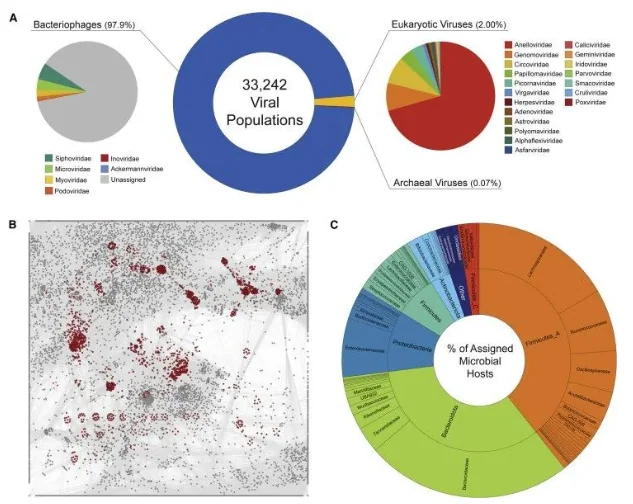
Figure 1. The Gut Virome Database.
2. Multiple factors influence gut phages
Factors influencing gut phage composition include diet, genetics and disease status (Figure 2) [2]. Compared with a normal diet, dietary interventions reduced variation in phage communities among unrelated individuals and significantly altered virome composition. Genetic factors have been proposed to influence phage composition because identical twins have more similar viromes than unrelated individuals. An earlier study found that genetic relatedness did not produce virome similarity, but a later publication using a larger human cohort challenged that result [3].
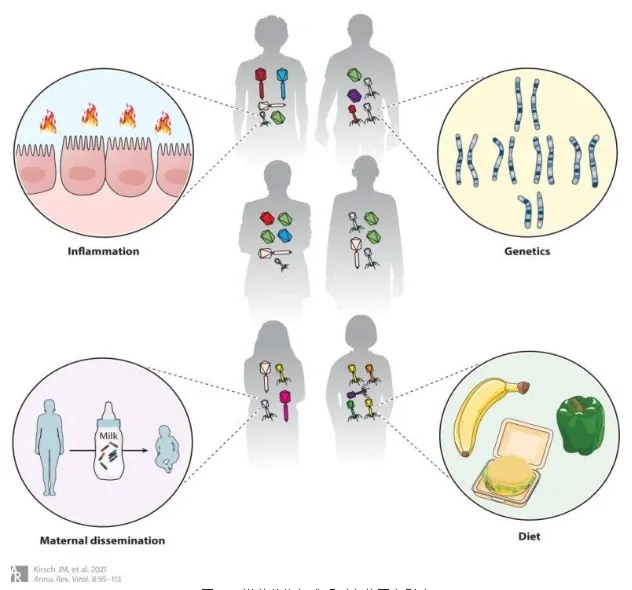
Figure 2. Multiple factors influence the composition of gut phage communities.
Gut phage composition also changes with age [1]. The source describes phage richness increasing during infancy, declining during adolescence, reaching high abundance in adulthood and decreasing again in older people. The infant virome is transitional. The source states that Microviridae and Siphoviridae increase in abundance over time, but also states that Siphoviridae decreases. Translation note: these two statements about Siphoviridae conflict in the original; no replacement family has been inferred. Adult viromes are characterized by high levels of Podoviridae, Microviridae and Siphoviridae. Podoviridae and Microviridae remain abundant in older people.
At the time of the article, research had associated gut phages with several human diseases, including inflammatory bowel disease (IBD), obesity, type 2 diabetes and liver disease. For example, individuals with IBD had increased abundance of Caudovirales and decreased abundance of Microviridae, suggesting an association between disease and expansion of Caudovirales phages. Phages identified as uniquely associated with Crohn's disease were closely related to phages of Lactobacillus, Clostridium, Enterococcus and Streptococcus. These phages were not observed in patients with ulcerative colitis, highlighting associations between particular phages and different diseases [4]. In addition, faecal samples from patients with alcohol-associated hepatitis showed greater viral diversity than samples from controls without alcohol use disorder. Phages of Escherichia, Enterobacter and Enterococcus were overrepresented in these patients, while increased abundance of Staphylococcus phages was strongly associated with disease severity. Interestingly, patients with severe non-alcoholic fatty liver disease had lower gut viral diversity and a significantly smaller proportion of phages relative to other gut viruses [5].
3. Interactions between gut phages and bacteria
Intestinal microbial habitats are shaped by the gut's complex macroscopic and microscopic anatomy. Bacteria can take advantage of this structure by finding refuge from phage attack within mucin. Phages can also adhere to mucin, helping them resist clearance. Hundreds of bacterial species in the human microbiota occupy different niches in the intestinal lumen and on mucosal surfaces. Across several trophic levels, they form complex networks of antagonism and cross-feeding that provide environments for both virulent and temperate phages. The complexity of the microbiota and gut structure creates multiple biotic and abiotic selective forces that shape taxonomic composition and direct the short- and long-term evolution of species. Together, these conditions appear to favour more complex ecological and evolutionary dynamics between phages and their bacterial hosts. A deeper understanding of how phages regulate gut bacteria could help in designing effective, targeted phage therapies.
3.1. Ecological forces shape interactions between gut phages and bacteria
Phage–bacterium interactions drive coevolution and shape microbial ecology. In the gut, these interactions can produce different ecological dynamics. Applied to phage–bacterium interactions, the Red Queen hypothesis describes a parasitic relationship characterized by cycles of bacterial resistance and phage counter-resistance (Figure 3a) [6]. Another explanation is “kill-the-winner” dynamics (Figure 3b), a model resembling the Lotka–Volterra equations used to describe predator–prey interactions [7]. For virulent phages, kill-the-winner dynamics depend on bacterial population density. When the bacterial host population is sparse, encounters between phages and hosts are infrequent and fewer infections occur. If the host population expands, phages have more opportunities to encounter susceptible hosts, and the higher infection rate slows bacterial population growth (Figure 3b). When applied to virulent phages infecting different bacterial populations, however, kill-the-winner dynamics can cause sudden population collapses. In bacterial communities containing multiple species, cycles of expansion and collapse occur for each species. Overall population diversity can be maintained as long as bacterial growth rates are high. Nevertheless, few examples of kill-the-winner dynamics had been described in the human gut at the time of the source article.
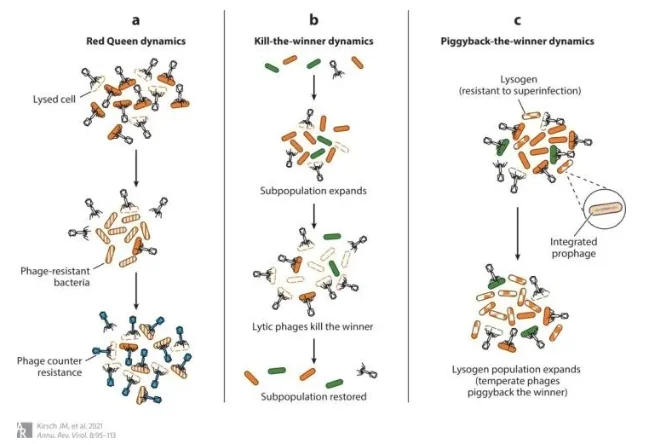
Figure 3. Phage–bacterium interactions in the gut produce different ecological dynamics.
3.2. Human gut phages can hitch a ride with bacteria
The relationship between human gut phages and their bacterial hosts can resemble a partnership rather than a fight to the death. “Piggyback-the-winner” dynamics [8] describe ecological conditions relevant to temperate phages in dense microbial communities. Many habitats with dense bacterial populations, such as the gut, coral reefs and soil, have lower phage-to-bacterium ratios than expected. This reduction can be explained by temperate phages entering lysogeny. Most gut bacteria are lysogenized by at least one temperate phage. Temperate phages protect their hosts from further phage infection through a process called superinfection exclusion. Lysogenic conversion can also confer several fitness advantages on bacterial hosts. The piggyback-the-winner model proposes that high microbial density favours lysogeny over lytic phage replication (Figure 3c).
3.2.1. Mutualism during coevolution
At the population level and above, the selective pressure that phages exert on bacteria appears to be an important driver of gut microbial community stability and diversity. Bacteria show remarkable diversity in their adaptations to phages, with resistance mechanisms operating at almost every stage of phage infection. Developing resistance can impose metabolic costs and ultimately reduce bacterial fitness. Unlike in pure cultures, phage-resistant strains with lower resistance costs dominate in more complex communities. Whatever the cost of resistance to an individual bacterium, producing variants that are less fit than their parents at a given time is an evolutionary cost. The potential return is a range of phenotypes that may benefit the population, because a diverse population has a greater chance of surviving a changing environment (Figure 4a). Coevolution can also extend beyond antibiotic or phage resistance to other evolutionary processes. One common example is the evolution of contingency loci: hypervariable regions of DNA that allow bacteria to switch phenotypes through a process called phase variation.
Another advantage of retaining phages is that bacteria can use them as weapons against potential competitors (Figure 4b). The presence of phages can prevent invasion by phage-susceptible bacteria. Through dynamics resembling herd immunity, phase variation may create regions with different phage concentrations within a bacterial population. This creates a range of phage-imposed selective pressures and can produce distinct coevolutionary processes within the population. Coevolution can also benefit phages by diversifying and changing their own populations. For example, tail-associated genes in tailed phages participate in adsorption and are prone to mutations that can change their targets. This increases phage diversity within the population and can accelerate bacterial evolution while increasing diversity in both bacterial and phage populations.
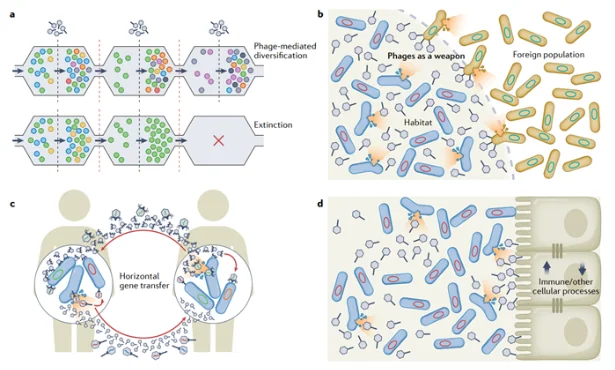
Figure 4. Benefits that bacterial populations can obtain from phages.
3.2.2. The role of lysogenic and chronic infections
The state of co-replication arising during lysogenic or chronic phage infection is a recognized form of temporary symbiosis between bacteria and phages. Prophages are sheltered within lysogens from external conditions, whether those conditions reduce viral activity, offer few alternative hosts or restrict the dispersal of virus particles. Prophages often carry genes that increase their hosts' overall fitness and thereby improve their own chances of survival. These changes can include tolerance of environmental stresses such as antibiotics or osmotic pressure, defence against predators, or new competitive mechanisms such as prophage-encoded bacteriocins. All of these advantages are associated with the silent part of the prophage life cycle. Lysogenic bacteria can also acquire immunity to selected phages through prophage-encoded superinfection immunity systems. As a population, the bacteria can therefore survive as long as induction does not lyse every member.
Gut bacteria occur as heterogeneous populations because of factors including diversifying selection by phages and migration. When lysogenic bacteria are adjacent to phage-susceptible competitors of the same species in the gut, they can gain a fitness advantage by inducing their prophages and releasing phages that attack susceptible strains (Figure 4c). The released phages infect and lyse susceptible competitors, capture fragments of their DNA and transfer them back to the original strain. This “autotransduction” allows Staphylococcus aureus carrying particular prophages to exchange antibiotic resistance genes (ARGs) rapidly and survive selective pressure in both in vitro and in vivo infection models. Induction can further benefit a bacterial population through interactions between phages and the animal host itself (Figure 4d), particularly interactions involving the immune system.
3.2.3. The role of horizontal gene transfer in microbial community fitness
Horizontal gene transfer (HGT) plays a crucial role in shaping the genetic diversity of microbial communities. In the gut, HGT spreads genes that increase fitness (Figure 4c). The same exchange mechanisms can also spread genetic traits that are potentially dangerous to mammalian hosts, including ARGs, toxins and virulence factors. However, although phages contain genes homologous to ARGs, those genes generally do not encode functional antibiotic resistance. Research discussed in the source demonstrated a third type of transduction in temperate phages of Salmonella and Staphylococcus, called “lateral transduction” (Figure 5). This mechanism appeared to be widespread and was reported to occur at rates 1,000 times those of generalized transduction.
Under the Black Queen hypothesis, an adaptive reduction in an individual strain's genome can be a successful bacterial strategy if ready, rapid access to the shared species pangenome is assured. Heterogeneous populations of a gut bacterial species coexist within a microbial community. Different strains share the species' core genome while each contributes a distinctive collection of accessory genes to its pangenome, potentially accounting for as much as 30% of an individual genome. A single strain cannot bear the large genetic or metabolic burden of every potentially useful accessory gene, some of which may be needed only under particular conditions. Instead, these genes are distributed across the shared species pangenome and dynamically exchanged through HGT. As phages and other gene-transfer mechanisms operate continually, the pangenome can be imagined as a physical entity: an ocean of genome fragments mobilized by phages, in which the individual bacterial populations making up complex microbial communities are immersed.
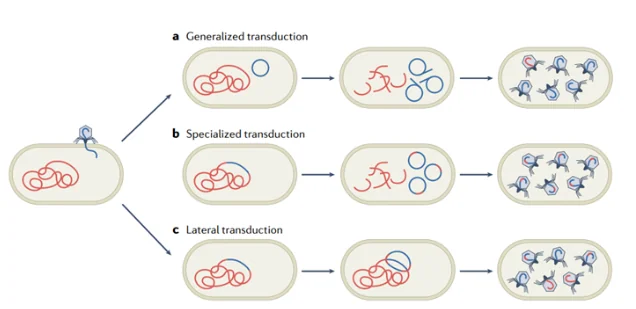
Figure 5. Three types of phage-mediated transduction.
Conclusion
The discovery of associations between gut phages and human disease renewed interest in this field. At the time of the article, however, a causal link between gut phages and disease had not been established, and further research was needed to determine whether changes in gut phages cause disease onset or progression. Findings were also largely limited to very broad phage categories rather than particular phage types or phages infecting specific hosts. Understanding this intestinal “dark matter” and its effects on human health and disease therefore remained at an early stage.
Encouragingly, the years preceding publication had brought substantial advances in knowledge of interactions between bacteria and their phages. These interactions have wide-ranging effects on the host's intestinal biology. Further investigation across the field, identifying new features of gut phage–bacterium interactions, could support better-informed approaches to manipulating the microbiota. New insights into how phage–bacterium and phage–host interactions regulate health and disease were expected to keep phages at the forefront of host–microbe research in the years ahead.
References
[1] Ann C Gregory, Olivier Zablocki, Benjamin Bolduc, et al. The gut virome database reveals age-dependent patterns of virome diversity in the human gut. Cell Host Microbe. 2020.11;28 (5).
[2] Joshua M Kirsch, Robert S Brzozowski, Patrick R Secor, et al. Bacteriophage-bacteria interactions in the gut: from invertebrates to mammals. Annu Rev Virol. 2021. 29;8 (1), 95-113.
[3] Moreno-Gallego JL, Chou SP, Di Rienzi SC, Goodrich JK, et al. Virome diversity correlates with intestinal microbiome diversity in adult monozygotic twins. Cell Host Microbe. 2019. 25:261–72.e5.
[4] Jason M Norman, Scott A Handley, Miles Parkes, et al. Disease-specific alterations in the enteric virome in inflammatory bowel disease. Cell. 2015 Jan 29. 160 (3), 447-60.
[5] Cynthia L Hsu, Yi Duan, Derrick E Fouts, Bernd Schnabl. Intestinal virome and therapeutic potential of bacteriophages in liver disease. J Hepatol. 2021. 75 (6), 1465-1475.
[6] Forsberg KJ, Bhatt IV, Schmidtke DT, Javanmardi K, Dillard KE, et al. Functional metagenomicsguided discovery of potent Cas9 inhibitors in the human microbiome. eLife. 2019. 8:e46540.
[7] Winter C, Bouvier T, Weinbauer MG, Thingstad TF. Trade-offs between competition and defense specialists among unicellular planktonic organisms: the “killing the winner” hypothesis revisited. Microbiol. Mol. Biol. Rev. 2010. 74:42–57.
[8] Andrey N Shkoporov, Christopher J Turkington, Colin Hill. Mutualistic interplay between bacteriophages and bacteria in the human gut. Nat Rev Microbiol. 2022 Jun 30.
Translation note: The reference list and citation numbering are retained from the source. Reference [6], attached there to the Red Queen hypothesis, is titled as a study of Cas9 inhibitors; this apparent citation mismatch has not been replaced with a guessed reference.